
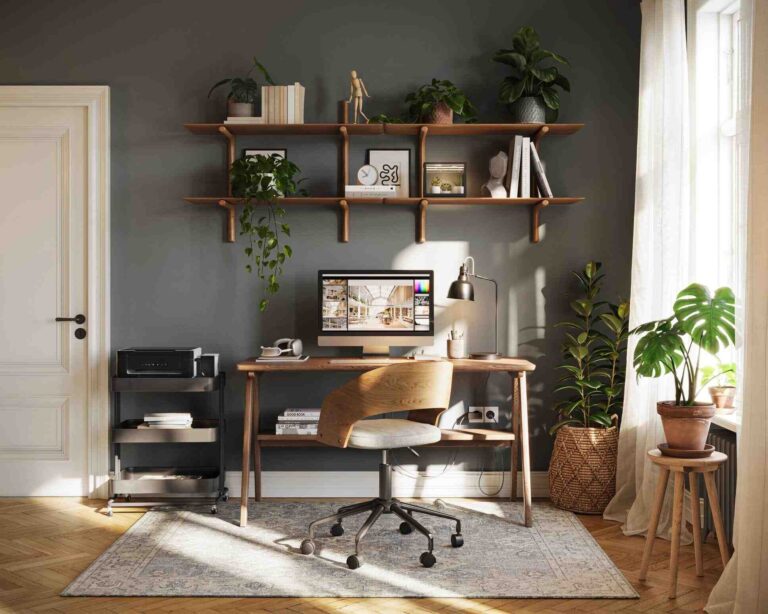
Modern homes have undergone a fundamental identity shift. For decades, an apartment was a place to eat, sleep, and decompress between shifts at a centralized office. However, the seismic shift toward remote and hybrid work has transformed the four walls of the urban apartment into a corporate headquarters, a fitness studio, and a sanctuary all at once.
The reason property owners are struggling to keep up is that traditional layouts are too rigid for this new reality. Because tenants are no longer satisfied with balancing laptops on kitchen islands, the flex unit renovation has become the baseline for staying competitive in a saturated market. To stay competitive and drive higher ROI, you must modernize your units with a strategic architectural pivot that turns rigid floor plans into adaptable, high-value living spaces.
What Is a Flex Unit?
In the context of multifamily apartments, a flex unit is a residential layout designed with intentional fluidity. Unlike traditional floor plans, where rooms are strictly defined as “Bedroom 1” or “Living Room”, flex units utilize architectural elements that allow the inhabitant to reconfigure the space based on their immediate needs.
Traditional vs. Flex-Enabled Layouts
In a traditional layout, walls are static, and utility placement (outlets, lighting) dictates where furniture must go. A flex unit renovation breaks these boundaries. It might feature a “plus” space, a nook or alcove that isn’t quite a bedroom but is more than a hallway, equipped with its own lighting and power.
Common Configurations
The beauty of the flex unit lies in its name: flexibility. Common iterations include:
- The Professional Pivot: A sunlit alcove that functions as a high-end executive office by day and a guest sleeping area by night.
- The Wellness Hub: A partitioned area with reinforced flooring for heavy gym equipment or yoga, which can be tucked away behind sliding panels.
- The Dual-Suite: A layout where a secondary “flex room” can serve as a nursery, a walk-in wardrobe, or a content creation studio for the growing demographic of “solopreneurs.”
Why Flex Unit Renovation Is Gaining Momentum
The momentum behind flex unit renovation isn’t just a trend; it’s a response to a structural change in the labor market.
- The Permanence of Remote Work
While some companies have pushed for a “return to office,” the hybrid model has emerged as the victor. According to recent statistics, a significant portion of the US workforce remains in a “work-from-anywhere” capacity. This has turned “proximity to the office” into “quality of the home office” as the primary driver for tenant decisions.
- Tenant Demand for Adaptability
Millennials and Gen Z lean more into a rental lifestyle because of its flexibility, valuing experiences over square footage. They would rather have a 700-square-foot apartment that works perfectly for their lifestyle than a 900-square-foot apartment with “dead” space. They are looking for “active” square footage, areas that can be optimized for productivity.
- Competitive Pressure
In major hubs like Austin, Charlotte, and Phoenix, a wave of new luxury construction is hitting the market. Owners of older “Class B” or “Class C” properties are finding that a flex unit renovation is the most effective way to close the gap and prevent their assets from becoming obsolete.
Benefits of Flex Unit Renovation for Property Owners
Investing in flexibility isn’t just about aesthetics; it’s about the bottom line.
- Higher Tenant Satisfaction and Retention
Moving is expensive and stressful. Tenants are more likely to renew their leases if their apartment can “grow” with them. A flex unit can transition from a bachelor pad to a couple’s home with a nursery, or from a student’s dorm to a professional’s home office, without requiring a change of address.
- Ability to Command Higher Rents
A “1-Bedroom + Flex” unit can often command a rent price nearly as high as a traditional 2-bedroom, despite having a smaller total footprint. Property owners can maximize their price-per-square-foot by marketing the “added value” of a dedicated workspace.
- Future-Proofing Assets
Real estate is a long-term play. By renovating for flexibility now, owners ensure their buildings remain relevant regardless of how work-life balance evolves over the next decade.
- Faster Leasing Velocity
In a crowded market, unique features like a “cloffice” or a “wellness nook” act as immediate differentiators. Properties offering flex unit renovations typically see shorter vacancy periods because they solve a specific pain point—the need for a home office—that standard apartments ignore.
- Adaptable Marketing Categories
Flex spaces allow you to pivot your marketing strategy without physical changes. You can list the same unit as a “1-Bedroom with Executive Suite” for young professionals or a “1-Bedroom with Nursery” for small families, effectively doubling your pool of potential qualified leads.
Key Design Principles for Flex Unit Renovation
Executing a successful flex unit renovation requires more than just knocking down a wall. It requires a holistic approach to design that considers how humans actually interact with their environment.
- Space Planning and Layout
The goal is to eliminate “dead zones.”
- Movable Walls and Sliding Panels: Using frosted glass barn doors or acoustic sliding partitions allows tenants to “close the door” on work at 5:00 PM, physically and mentally separating their job from their relaxation space.
- Open-Plan Concepts: Removing non-load-bearing walls creates a “great room” feel, allowing light to penetrate deeper into the unit and giving the tenant a blank canvas.
- Electrical, Lighting, and Acoustics
If a space is meant for work, it must perform like an office.
- Integrated Power: This means USB-C ports, floor outlets for desks in the center of the room, and “smart” lighting that can shift from cool “daylight” (for focus) to warm “amber” (for evening relaxation).
- Soundproofing: This is the most overlooked aspect of flex unit renovation. Adding resilient channels in walls or using acoustic-grade drywall ensures that a tenant’s Zoom call isn’t interrupted by their neighbor’s television.
- Storage and Furniture Solutions
Flexibility requires hidden infrastructure.
- Built-in Modular Storage: Closet systems that can be adjusted to hold office supplies or gym gear.
- Foldaway Desks: Built-in “cloffice” (closet-office) solutions allow a workspace to disappear entirely when not in use.
Flex Unit Renovation in Existing Apartment Buildings
Retrofitting an existing building presents unique challenges compared to new construction. However, these “value-add” opportunities are where the highest returns are often found.
Structural and Code Considerations
When embarking on a flex unit renovation, owners must navigate local building codes. A room cannot be legally called a “bedroom” unless it has a window and a closet. This is why “Flex Space” or “Den” is the preferred terminology—it allows for the creation of functional spaces without the strict egress requirements of a bedroom.
Cost-Effective Strategies
You don’t always need a full “gut” renovation. Effective strategies include:
- Niche Creation: Repurposing oversized walk-in closets or wide hallways into “tech nooks.”
- Kitchen Island Extensions: Installing islands with built-in power outlets and ergonomic heights that serve as secondary workstations.
Phased Renovations
To maintain cash flow, many owners opt for a “renovation on turnover” strategy. As tenants move out, units are upgraded to the “flex” model, allowing the building to gradually transition to a higher rent tier without a total shutdown.
The Future of Apartment Living
As we look toward 2030, the flex unit will likely become the standard rather than the exception. We are seeing a move toward Smart Flex Units, where the environment responds to the tenant. Imagine an apartment where, at the touch of a button, the lighting shifts, the standing desk rises from the cabinetry, and the smart glass on the balcony tints to reduce glare on your screen.
Integration with building-wide amenities is also changing. “Flex” no longer stops at the apartment door; it extends to co-working lounges and private “Zoom pods” located in the building’s common areas, creating a seamless ecosystem for the modern worker.
Partner with Premiere for Your Flex Unit Renovation
The “Flex-Unit” is more than a design trend; it is a manifestation of the new lifestyle. For property owners and developers, flex unit renovation is the most potent tool available to increase property value, attract high-quality tenants, and insulate assets against a changing world.
To successfully navigate these complex upgrades, Premiere Property Services stands ready as a partner for Apartment Renovations to bring your vision to life. From initial space planning to high-end execution, we ensure your units meet the demands of the modern workforce. By investing in adaptability today, you are not just renovating the apartment; you are building the infrastructure for the future of work.